
An Estate Cleanout Guide for Concord Families
Clearing a family home is hard enough without the logistics fighting you. Here is how to plan the practical side with as little stress as possible.
In this guide
- First, give yourself time
- How long a clearance really takes
- What can't go in the container
- Appliances and the refrigerant rule
- Working with executors and agents
- Sizing a house clearance
- Discretion and placement
- A gentle order of operations
Clearing the home of someone who has died, or moving a parent into care, is one of the harder things most people do. The emotional weight is the real work. The practical side - the container, the sorting, the disposal - should be as simple and unobtrusive as possible, and this guide is meant to keep it that way.
First, give yourself time
The most useful advice we can offer is not to rush. A house holds decades of a life, and sorting through it against the clock leads to two bad outcomes: things worth keeping get thrown out, and the whole process becomes more upsetting than it needs to be.
That is why we set estate clearances up differently from an ordinary rental. Rather than a seven-day container with a collection date bearing down on you, we arrange an extended rental on a daily rate, agreed at the start, for as long as the job realistically needs. Nobody from our office will ring to hurry you along.
How long a clearance really takes
Most house clearances take longer than families expect - not because the physical work is enormous, but because the sorting is emotional and cannot be forced. Three to five weeks is entirely normal for a full home, and there is no problem with that.
If the property is being sold, we work backwards from the closing date so the house is clear with a comfortable margin rather than in a panic the day before. If probate is still in progress, we can hold the arrangement flexibly around it. Tell us the timeline and constraints and we will fit the container to them.
What can't go in the container
Every house clearance turns up things that cannot simply go in a roll-off, and it is easier to know the list in advance than to discover it mid-job.
The usual items needing separate handling are old paint and solvents, fuel and oil, garden and pool chemicals, car and household batteries, tyres, propane cylinders, and certain electronics. Garages, sheds and outbuildings are where most of this hides - and on the rural properties around Midland, Mount Pleasant and the county edges, an outbuilding can hold decades of it.
Walk those spaces early rather than late. Knowing what is there in the first week lets us arrange the right handling for it rather than having it hold up the final collection.
Appliances and the refrigerant rule
Appliances deserve their own note because one category has a specific requirement. Anything containing refrigerant - refrigerators, freezers, chest freezers, dehumidifiers, window and portable air conditioners - needs that refrigerant professionally recovered before the unit can be disposed of.
This is a legal requirement, not a preference, and it means those units cannot just go in the container. Identify them early and set them aside. Other large appliances like washers, dryers and stoves are simpler and can often be handled as scrap metal, which keeps them out of the general waste and captures a little value.
Working with executors and agents
Estate clearances often involve people beyond the immediate family, and we are used to working with all of them. Where an executor or estate attorney is administering things, we can invoice the estate directly and provide whatever documentation the accounts require, rather than a family member paying and reclaiming.
Where a real estate agent is coordinating a sale, we will liaise with them on access and timing so the family does not have to relay messages back and forth. And where several family members are involved, it helps enormously to nominate one point of contact for us - it prevents crossed wires and conflicting instructions during an already stressful time.
Sizing a house clearance
House contents are bulky rather than dense, which makes this one of the jobs where the larger container is usually right. A fully furnished three-bedroom home typically fills a 30 yard.
There are exceptions worth flagging when you call. If the clearance includes carpet being lifted, tile coming up, or an attic and outbuildings packed with stored material, the weight climbs and a 20 yard swapped can work out better than a single 30. And a hoarding situation is genuinely different - for those we would rather come and look than guess over the phone, because getting the size wrong helps nobody.
Discretion and placement
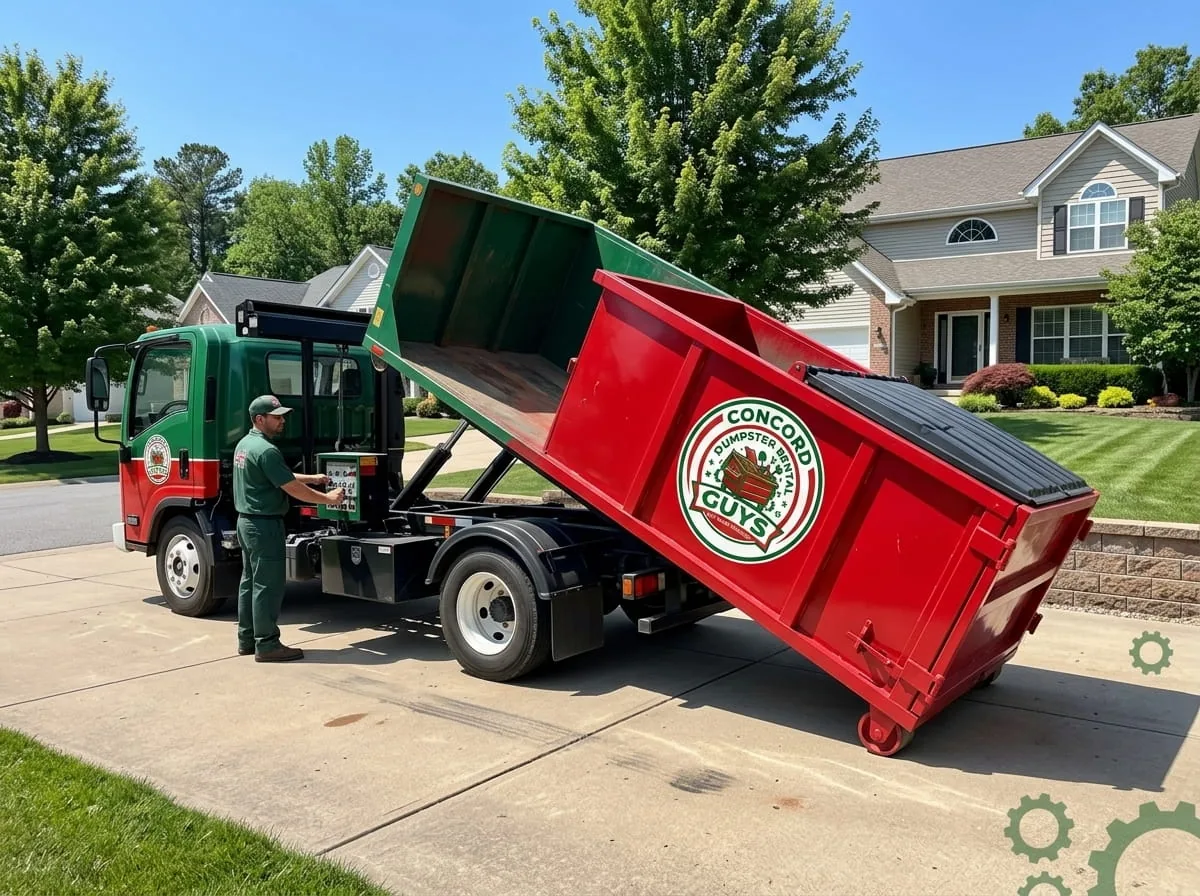
A container in a driveway is visible, and for a family clearing a home after a loss that visibility can feel like a private matter made public. We understand that, and where the family would prefer it be less conspicuous we will place the container as discreetly as the site allows - to the side, toward the rear, wherever access permits.
On the practical side, the driveway is protected with hardwood cribbing as standard so there is no damage to the property, which matters when a house is about to go on the market.
A gentle order of operations
If it helps to have a sequence: start by walking the whole property, including the garage, attic and any outbuildings, and note anything that needs special handling. Set those items aside. Then work room by room at a pace that allows proper sorting, keeping the container for what is genuinely being discarded. Keep any masonry or heavy material separate from the general contents. And lean on us for the logistics - the timeline, the size, the special items - so you can put your attention where it actually belongs.
This is work we do with care because we know what sits behind it. Tell us what you are dealing with and we will make the practical side as light as we can.
Book a container in Concord
One flat rate covering delivery, seven days, pickup and disposal.
(704) 743-4429Questions readers ask about this
How long can I keep a dumpster for an estate cleanout?
As long as the clearance genuinely needs - three to five weeks is entirely normal for a full home. We set estate rentals up on a daily rate agreed at the start, and nobody will ring to hurry you along.
Can the estate be billed directly rather than a family member?
Yes. We regularly invoice executors, estate attorneys and property managers directly and provide whatever documentation the estate accounts require, which is often simpler than a family member paying and reclaiming.
What can't I put in the container during a cleanout?
Paint, solvents, fuel, oil, chemicals, batteries, tyres, propane cylinders and appliances with refrigerant all need separate handling. Garages and outbuildings hide most of it, so it helps to walk those spaces early.
What size do I need to clear a whole house?
Usually a 30 yard for a fully furnished three-bedroom home, since contents are bulky rather than dense. If there is heavy material like tile or a packed attic, tell us - a 20 yard swapped can sometimes work out better.